Πώς λειτουργεί το μηχάνημα
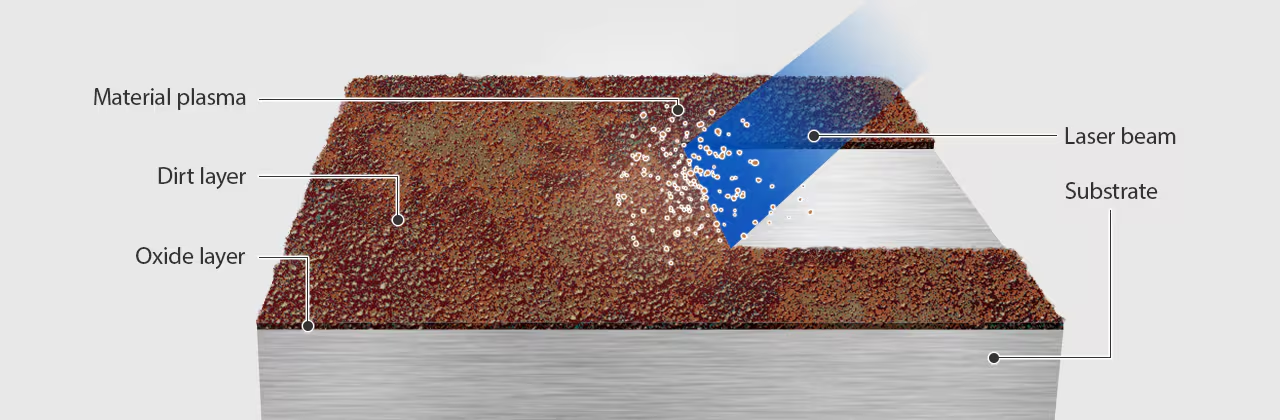
Τα περισσότερα συστήματα ακριβείας που χρησιμοποιούνται για βιομηχανικό καθαρισμό είναι παλμικά λέιζερ ινών σε συνδυασμό με χειρολαβή ή κεφαλή σαρωτή. Το λέιζερ παραδίδει ενέργεια σε σύντομες ριπές. Η αλληλεπίδραση της επιφάνειας ρυθμίζεται έτσι ώστε το ανεπιθύμητο στρώμα να απορροφά και να απελευθερώνεται ενώ το υπόστρωμα διατηρείται.
Βασικές μεταβλητές που ρυθμίζουμε (ανάλογα με το υλικό, το στρώμα και το στόχο φινιρίσματος):
- Ενέργεια παλμού και ρυθμός επανάληψης: πώς παραδίδεται η ενέργεια με την πάροδο του χρόνου.
- Μέγεθος σημείου και επικάλυψη: πόσο σφιχτά εστιάζεται η ενέργεια και πώς αναμειγνύονται τα περάσματα.
- Ταχύτητα σάρωσης / παραμονή: πόσο χρόνο παραμένει η ενέργεια σε μια δεδομένη περιοχή.
- Στρατηγική περάσματος: αριθμός περασμάτων και κατεύθυνση για επίτευξη ομοιομορφίας.
Τι αφαιρούμε
- Σκουριά, οξείδια και προϊόντα διάβρωσης
- Μπογιά και επικαλύψεις (πλήρης αφαίρεση ή επιλεκτική/σημειακή αφαίρεση)
- Εναποθέσεις άνθρακα και αιθάλη
- Λάδια, υπολείμματα και επιφανειακή ρύπανση (ανάλογα με την περίπτωση)
Ορισμένες επικαλύψεις και υποστρώματα απαιτούν ένα γρήγορο δοκιμαστικό πέρασμα για να επιβεβαιωθεί η επιλεκτικότητα και το φινίρισμα. Το κάνουμε αυτό πρώτα—πριν δεσμευτούμε για εργασία παραγωγής.
Τι μπορείτε να περιμένετε από την επιφάνεια
Ο καθαρισμός με λέιζερ εκτιμάται συνήθως για τον έλεγχο:
- Συνεπή, επαναλαμβανόμενα αποτελέσματα όταν οι παράμετροι τεκμηριώνονται
- Ελάχιστα αναλώσιμα σε σύγκριση με την αμμοβολή
- Μειωμένη ανάγκη για δευτερογενή καθαρισμό
- Ισχυρή επιλογή για προετοιμασία επιφάνειας (προετοιμασία συγκόλλησης, προετοιμασία συγκόλλησης, προετοιμασία επαναβαφής)
Η τελική εμφάνιση εξαρτάται από το υπόστρωμα, το πάχος του στρώματος και τον στόχο της διαδικασίας (π.χ., “καθαρισμός σε γυμνό μέταλλο” έναντι “αφαίρεση μόνο οξειδίου”).
 {loading=“lazy”}
Εάν θέλετε μια ακριβή προσφορά, στείλτε email με τύπο υλικού, κατάσταση επιφάνειας, διαστάσεις/ποσότητα και φωτογραφίες: ubiclean.hellas@gmail.com.
Για πληροφορίες σχετικά με τη ροή εργασίας μας, τη διαδικασία ασφάλειας και την προσέγγισή μας, δείτε Σχετικά με εμάς.
Συχνές ερωτήσεις
Τι αφαιρεί ο καθαρισμός με λέιζερ;
Ο καθαρισμός με λέιζερ αφαιρεί σκουριά, οξείδια, μπογιά, επικαλύψεις, εναποθέσεις άνθρακα, αιθάλη, λάδια και επιφανειακή ρύπανση από μεταλλικά και βιομηχανικά εξαρτήματα.
Είναι ο καθαρισμός με λέιζερ ασφαλής για ευαίσθητες επιφάνειες;
Ναι. Οι παράμετροι λέιζερ ρυθμίζονται ακριβώς για να στοχεύουν το στρώμα ρύπανσης και να σταματούν στο υπόστρωμα. Πραγματοποιούμε πάντα δοκιμαστικό πέρασμα σε μικρή περιοχή πριν από οποιαδήποτε παραγωγική εργασία, εξασφαλίζοντας αποτελέσματα χωρίς εκπλήξεις.
Πού βρίσκεστε και πού εξυπηρετείτε;
Η UBICLEAN Hellas εδρεύει στη Θεσσαλονίκη και εξυπηρετεί βιομηχανικούς και εμπορικούς πελάτες σε όλη τη Βόρεια Ελλάδα και την Κεντρική Μακεδονία. Επικοινωνήστε μαζί μας για να αξιολογήσουμε την εργασία σας.
Πώς μπορώ να ζητήσω προσφορά για καθαρισμό laser;
Στείλτε email στο ubiclean.hellas@gmail.com με τον τύπο υλικού, την κατάσταση της επιφάνειας, τις διαστάσεις/ποσότητα και φωτογραφίες. Απαντάμε σε σύντομο χρόνο με ακριβή αξιολόγηση.